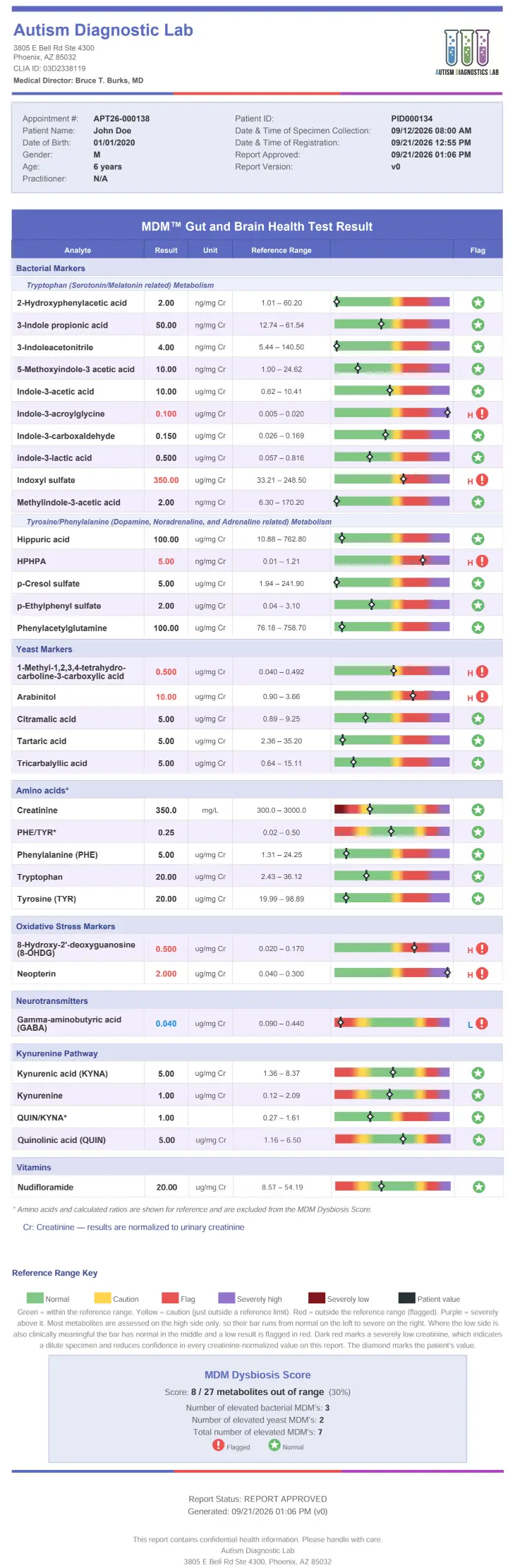

A sulfated phenolic metabolite produced when gut bacteria ferment tyrosine into p-cresol, which the liver then conjugates via sulfation for detoxification and urinary excretion. In autism research, elevated urinary p-cresol sulfate has been reported in some subgroups, linking microbial aromatic amino acid metabolism with altered sulfation capacity, oxidative stress, and gut-brain axis mechanisms relevant to neurodevelopment. Correlations to autism severity, mitochondrial dysfunction, immune system dysregulation, oxidative stress, and gut dysbiosis have been extensively discussed in scholarly articles.
A host and microbiome co-metabolite formed when gut bacteria convert tryptophan into indole, which is absorbed and then sulfated in the liver to produce indoxyl sulfate for urinary excretion. In autism research, altered urinary indoxyl sulfate levels have been reported in some subgroups, supporting the idea that shifts in microbial tryptophan metabolism may influence oxidative stress, immune signaling, and gut-brain axis pathways relevant to neurodevelopment. It has previously been linked to increased autism severity, mitochondrial dysfunction, immune system dysregulation, oxidative stress, and gut dysbiosis.
A bacterial metabolite linked to urea cycle disorders and the removal of neurotoxic ammonia waste from the body. When a patient presents to an emergency room in hyperammonemia crisis, doctors administer sodium benzoate to remove excess NH4+. Phenylacetylglutamine is detected in urine.
A microbially derived tryptophan metabolite used as a building block for some anticancer drugs, owing to its activity in preventing the proliferation of ALL cell growth, including cells necessary to the central nervous system during development.
An indication of excessive bacterial growth. This marker is broadly bacterial rather than species-specific. It is not a secondary metabolite but is bacteria-linked biology: essentially all bacteria initiate cell growth with formyl-Met (fMet), so abnormal levels may indicate dysbiosis.
A known metabolite of Clostridium sporogenes (the major producer). Excessive quantities may indicate dysbiosis. It may also have beneficial immunomodulatory effects through aryl hydrocarbon receptor stimulation.
Also called phenol sulfate, a sulfated metabolite formed when gut microbes generate phenol from aromatic amino acids such as tyrosine, after which the host liver conjugates it via sulfation for detoxification and urinary excretion. In autism research, elevated phenolic and sulfated microbial metabolites, including 4-phenolsulfonic acid, have been reported in some subgroups, suggesting links between dysbiosis, altered sulfation capacity, and neuroimmune or oxidative stress pathways relevant to neurodevelopment.
A bacterially derived metabolite found to be high in ASD. It may also play a role in depleting methyl groups (SAM to SAH).
Formed in the liver by conjugation of benzoic acid with glycine. Much of its precursor, benzoate, is generated through gut microbial metabolism of dietary polyphenols and aromatic compounds, making it a well-recognized host and microbiome co-metabolite. In autism research, altered urinary hippuric acid levels have been reported in some subgroups, suggesting shifts in microbial composition, aromatic amino acid metabolism, and glycine conjugation capacity that may intersect with gut-brain and detoxification pathways.
A bacterially derived metabolite of tryptophan. A potential biomarker for autism and gastrointestinal (GI) dysfunction, with a potential link to leaky gut.
A keto-acid formed when phenylalanine undergoes transamination. In phenylketonuria (PKU), deficient phenylalanine hydroxylase activity diverts excess phenylalanine toward phenylpyruvate production, leading to its accumulation and neurotoxicity. In parallel, certain gut microbes can metabolize phenylalanine into phenylpyruvate and related aromatic compounds, linking host and microbiome amino acid metabolism to systemic phenylalanine balance and downstream metabolic effects.
An indole alcohol produced primarily by gut microbes and certain yeasts through the metabolism of tryptophan. It can influence host physiology by modulating intestinal barrier function and immune signaling pathways. In autism research, altered levels of tryptophan-derived microbial metabolites, including tryptophol, have been observed in some subgroups, supporting the hypothesis that microbiome-driven shifts in tryptophan metabolism may impact neuroimmune regulation and gut-brain axis signaling relevant to neurodevelopment.
A tryptophan-derived indole metabolite produced by specific gut bacteria (including certain Clostridium and Peptostreptococcus species). It can act on host pathways such as aryl hydrocarbon receptor (AhR) signaling to influence mucosal immunity and barrier integrity. In autism research, altered levels of microbial indole metabolites, including trans-3-indoleacrylic acid, have been reported in some subgroups, supporting the concept that microbiome-driven tryptophan metabolism may modulate neuroimmune and gut-brain axis pathways relevant to neurodevelopment.
Produced by aerobic bacteria, yeast, or Aspergillus species (mold). It binds to magnesium, potentially leading to a magnesium deficiency.
A sugar alcohol produced primarily by certain yeast and fungal species (especially Candida). Elevated urinary arabinitol is often interpreted as a marker of fungal overgrowth within the gut microbiome. In autism research, increased arabinitol has been reported in some subgroups, suggesting that microbiome-associated dysbiosis and fungal metabolism may contribute to metabolic, immune, or oxidative stress pathways relevant to neurodevelopment.
An organic acid that can arise from dietary sources but is also associated with yeast and fungal metabolism in the gut. Elevated urinary levels are often interpreted as a marker of dysbiosis, particularly fungal overgrowth. In autism research, increased tartaric acid has been reported in some subgroups, supporting the hypothesis that microbiome-related metabolic byproducts may influence mitochondrial function, oxidative stress, or gut-brain signaling pathways relevant to neurodevelopment.
Another yeast-related metabolite found at higher levels in ASD individuals. Closely related to human metabolites that can block human metabolic pathways.
THβC-3-COOH compounds are documented as forming via Pictet-Spengler chemistry (common in foods and in vivo); microbial strain attribution is not clearly established in the sources retrieved. It has hallucinogenic properties and is created via a tryptophan plus acetaldehyde (yeast) metabolite reaction. It is a heme synthesis intermediary (CYP450 enzymes).
Used to determine the concentration of the urine sample and to adjust metabolite levels according to hydration. Excessively high or excessively low levels of creatinine may invalidate the results of this test.
The three precursor aromatic amino acids for the bacterial metabolites listed here. Low levels of tryptophan, phenylalanine, and tyrosine can be caused by a vegan diet or low protein intake; however, low levels of these compounds in combination with high levels of microbially derived metabolites may indicate dysbiosis.